Capitalising Fixed Assets in Dynamics 365 Finance and Operations
There are different ways to capitalise costs into a fixed asset in Dynamics 365 Finance and Operations. Before evaluating the best path, it helps to understand the underlying accounting concept.
What Is Capitalisation?
Capitalisation is used when you want to move a cost from the current period to a pluriannual asset. For example, imagine buying mobile phones intended as promotional free goods. If leftover stock is later repurposed for internal use (e.g. employee benefits), those phones become internal assets and need to be capitalised. The general entry would debit the Fixed asset account and credit the original cost account (e.g. Multimedia).
In all capitalisation methods, the fixed asset master data must already be created in the system.
Capitalisation Methods
1. Journal Entry
A strictly general ledger entry — it moves only the GL and not inventory. Ideal for capitalising services or unstocked items. It is not mandatory to use the fixed asset module for this method.
For more details: Capitalize journal entry to a fixed asset
2. Inventory
An inventory movement issue posted via an inventory journal. Ideal for capitalising stock items. It is mandatory to manage the fixed asset module if the process is synchronous with inventory.
For more details: Inventory to fixed assets journal
3. Project Investment
Costs are absorbed using an investment project. The project allows you to track transactions with more accuracy and detail (such as hour time, expense categories, etc.). It is mandatory to manage the fixed asset module if the process is synchronous with inventory.
For more details: Project investment to fixed assets journal
Decision Framework
The best approach depends on several variables related to your company's business model and transaction volume:
- Project module implementation — Typical for companies with a medium-to-high volume of asset transactions.
- Stock item capitalisation — Typical for manufacturing companies.
- Project tracking for capitalisation — Typical for large internal projects where the project module is already implemented (e.g. machinery industry, make-to-order production).
- Awareness of fixed assets at consumption time — Whether the user knows exactly which fixed asset to capitalise at the moment of posting.
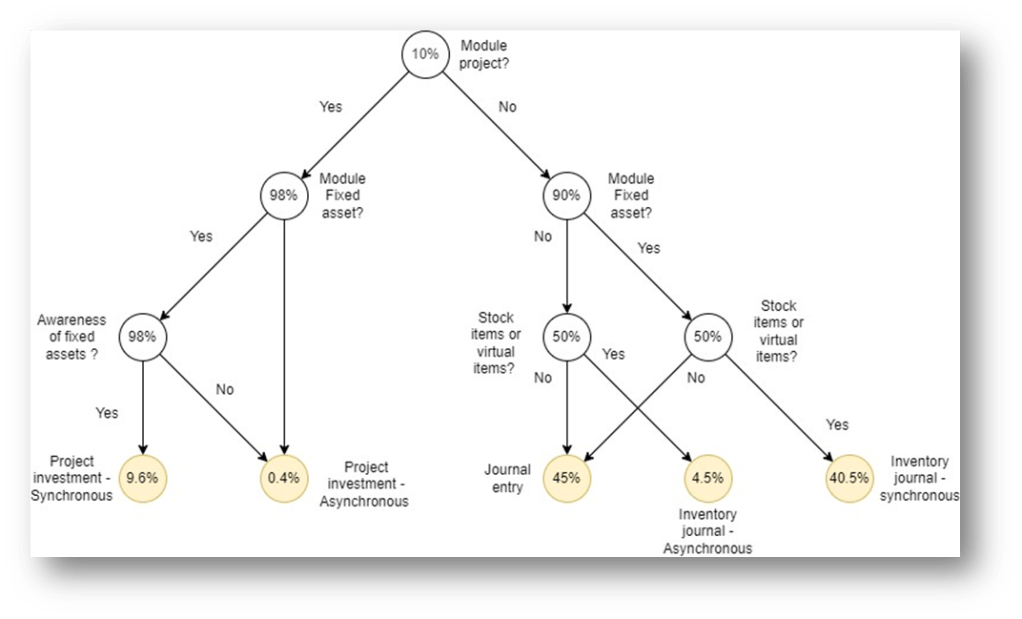
Source: Capitalized Fixed asset in D365FO – Giorgio Bonacorsi, Dax365FO